
Bitcoin is a digital or virtual currency that uses cryptography for security and operates independently of a central authority, such as a government or financial institution. Here are the key aspects of Bitcoin and how it works:
What is Bitcoin?
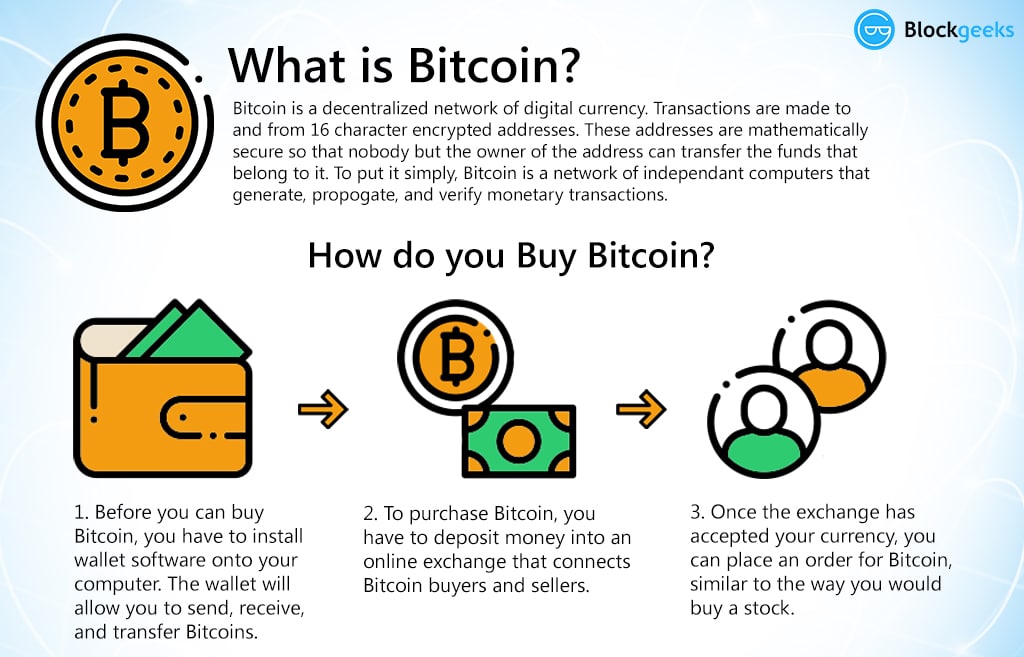
- Digital Currency: Bitcoin is purely digital and exists only in electronic form. It is not printed or minted like traditional currencies.
- Decentralized: Bitcoin operates on a decentralized network of computers (nodes) worldwide. This network is called the blockchain.
- Cryptocurrency: Bitcoin uses cryptographic techniques to secure transactions and control the creation of new units.
How Does Bitcoin Work?
Blockchain Technology: Bitcoin transactions are recorded on a blockchain public ledger. The blockchain is a chain of blocks, with each block containing a list of transactions. This ledger is maintained by a network of nodes and is accessible to anyone.
Mining: Bitcoin mining is validating and adding transactions to the blockchain. Miners use powerful computers to solve complex mathematical problems and verify transactions. In return for their efforts, miners are rewarded with newly created bitcoins and transaction fees.
Transactions: When you send or receive bitcoins, you create a transaction. This transaction is broadcast to the network and included in a block. Once the block is added to the blockchain, the transaction is considered confirmed.
Wallets: To store and manage bitcoins, you use a Bitcoin wallet. A wallet is a software application that holds your private keys and allows you to send and receive bitcoins. There are different types of wallets, including online wallets, mobile wallets, hardware wallets, and paper wallets.
Public and Private Keys: Bitcoin transactions are secured using a system of public and private keys. The public key is like an account number that you can share with others to receive bitcoins. The private key is a secret code that allows you to access and manage your bitcoins. It is crucial to keep your private key secure.
Peer-to-Peer Network: Bitcoin operates on a peer-to-peer (P2P) network, meaning that transactions occur directly between users without the need for an intermediary like a bank. This makes transactions faster and reduces fees.
Key Features of Bitcoin
- Limited Supply: There will only ever be 21 million bitcoins. This scarcity is built into the protocol to create value over time.
- Divisibility: A single Bitcoin can be divided into 100 million smaller units called satoshis, making it possible to use Bitcoin for small transactions.
- Pseudonymity: Bitcoin transactions are not tied to real-world identities. Instead, they are linked to addresses, which are alphanumeric strings derived from public keys.
- Security: Bitcoin's decentralized nature and cryptographic security make it resistant to hacking and fraud. However, users must take precautions to protect their private keys and use secure wallets.
Uses of Bitcoin
- Investment: Many people buy and hold bitcoins as an investment, hoping that their value will increase over time.
- Transactions: Bitcoin can be used to purchase goods and services from merchants that accept it as a payment method.
- Remittances: Bitcoin can be used to transfer money across borders quickly and with lower fees compared to traditional remittance services.
- Store of Value: Some consider Bitcoin a "digital gold" and use it as a hedge against inflation and economic instability.
Bitcoin has revolutionized the concept of money and financial transactions, offering a decentralized alternative to traditional currencies. Its underlying technology, the blockchain, has also paved the way for innovations in various industries beyond finance.